
|
11/24/2017 0 Comments Takt-Rhythm: Gameplay from Digige 2017
Dropping Beats in Two Dimensions
Video Gameplay
Game Review and Details
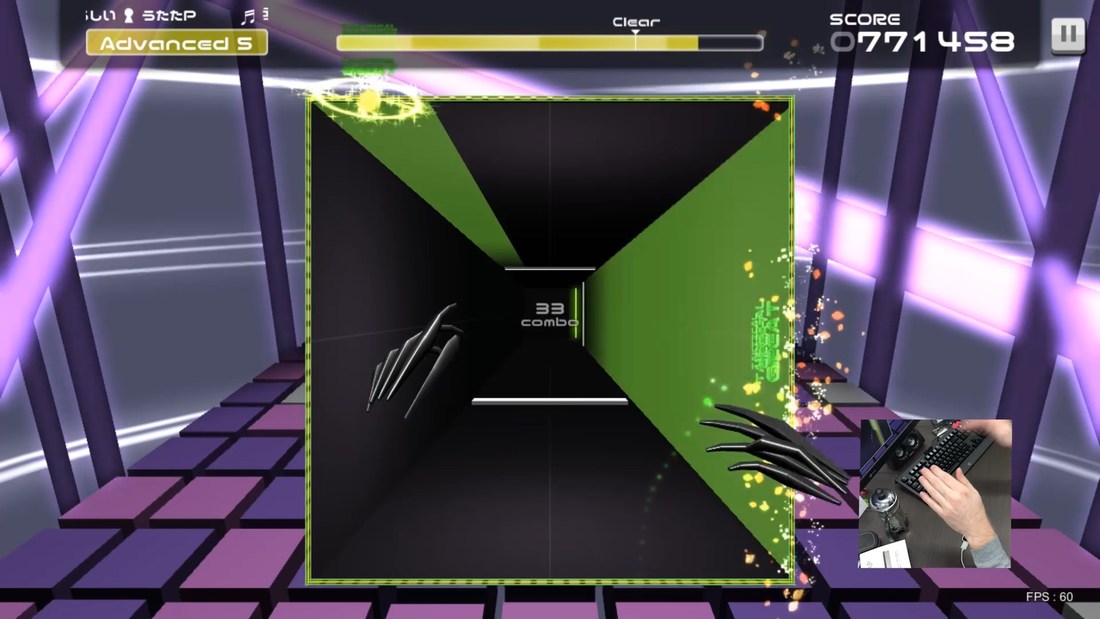
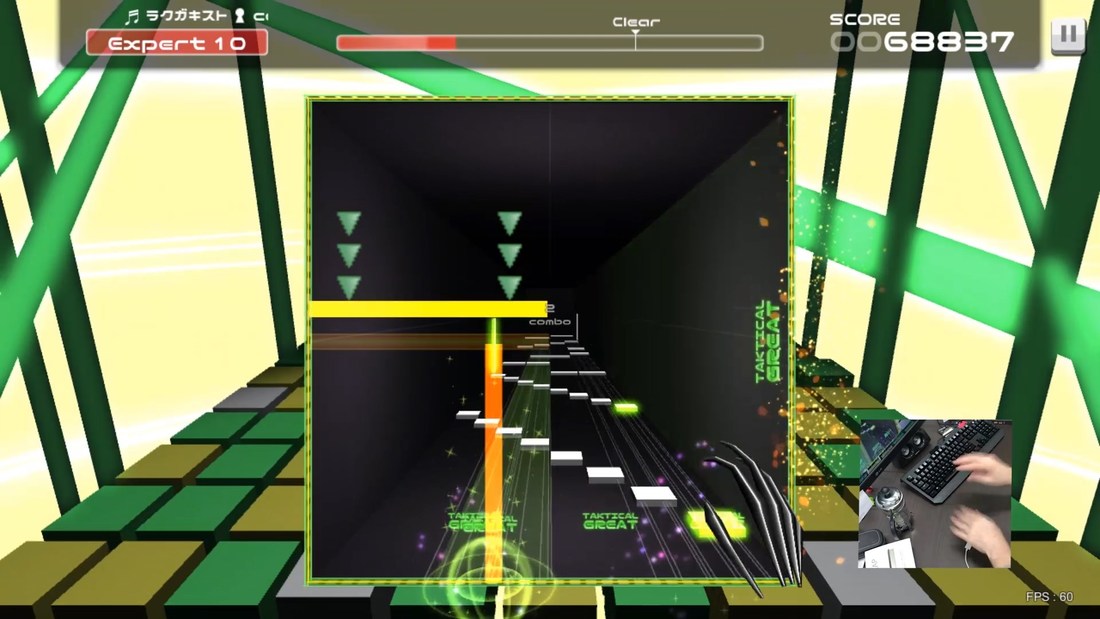
Takt-Rhythm is a rhythm game that elevates genre by expanding the game space beyond button mashing. By using the Leap motion controller, Takt-Rhythm lets the player manipulate a pair of wireframe hands that are used to interact with elements in game. While its still in demo and lacks the visual polish and interface of a completed game, it does provide a substantial list of titles to keep things fresh.
While the game comes with an impressive library of 69 tracks, there isn't much variety in terms of genres. There's both instrumental tracks and tracks with vocals (and some vocaloid), but all remind me of J-Pop and anime idols. The songs are divided into categories for easy management, with "Touhou Project" and "niconico" being but two examples. Overall the selection isn't bad, especially if you're into the idol thing, but variety would help expand the game's appeal. There's enough great creative commons music out there that could be incorporated into the game, while at the same time promoting those artists and their talents. With no physical controller, there are no buttons to push or remote to swing to keep rhythm. In its place, the Leap controller is used to manipulate your hands into tapping, pushing, and rotating various on-screen commands in order to keep time. Since the game uses two hands, the player has to contend with touching different inputs with each hand. For the most part, these features are fairly common in rhythm games. The Taiko no Tatsujin games, for example, require the player to use both hands to bang on the drums at different speeds. What’s different about Takt-Rhythm is that it adds a limited spatial dimension to the rhythm genre, requiring that the player pay attention to where commands appear on both the X and Y axes. That’s what’s especially fun about the game. It’s also amazingly frustrating for the uncoordinated like myself (but in a good way!). Setting up the Leap for the game easy; the “controller” is only a single sensor that plugs into a computer’s USB port. Once unboxed, plug in the sensor and download the software. After a short configuration to define the virtual space for play, you’re ready to go. While the Leap can be used mounted to VR headsets like the Vive, Takt-Rhythm isn’t a VR title. Instead, you place the sensor on the table in front of you and place your hands above it. Wireframes of the player’s hands appear on the screen and moving them above the sensor moves them in game. The lag time isn’t that bad, but unfortunately keeping your hands above the sensor gets tiring after extended gameplay sessions.
0 Comments
Your comment will be posted after it is approved.
Leave a Reply. |
|

 RSS Feed